
UK Gaming Firms Offset Remote Gaming Duty Rise Through Cost Controls
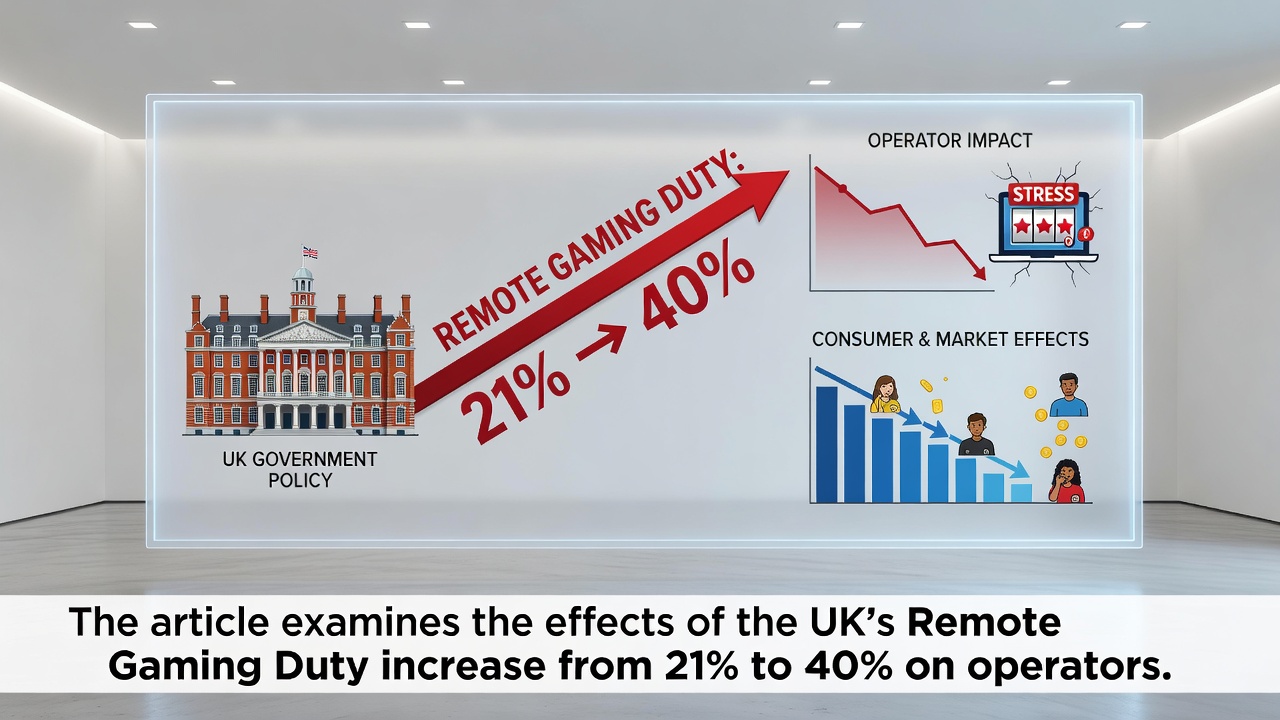
The Remote Gaming Duty rose from 21% to 40% of operators’ gross profits on April 1 2026, and six months later in October 2026 households have yet to encounter widespread price increases or lower slot returns across major platforms. Operators responded by trimming marketing budgets, streamlining operations, and applying efficiency measures that absorbed the added tax burden without immediate shifts to player pricing or returns.
Operators Absorb the Higher Levy Internally
Evoke, which runs William Hill and 888, reported an estimated £46 million rise in duty costs for the period and covered that amount by reducing promotional spending alongside operational savings. Those steps kept standard return-to-player percentages steady at major sites, with figures from casino.net showing averages between 95.88% and 96% on popular slots. Households therefore continued to see the same payout structures they had before the April change took effect.
Data from the six months to June 2026 financial results, which listed revenue of £887.5 million and adjusted EBITDA of £150.2 million, illustrate how companies maintained margins despite the steeper rate. Efficiency programmes and lower customer-acquisition outlays offset the duty impact, allowing operators to avoid passing costs directly to users through adjusted odds or fees.
Return-to-Player Rates Hold Steady
Slot RTP figures remained in the high-nineties range at leading UK-facing casinos, according to publicly available tracking data. Players accessing games from established operators encountered no systematic reductions tied to the duty hike, because the tax adjustment applied to operator profits rather than individual bet outcomes. This separation between the levy and game mechanics explains why returns did not drop noticeably in the months following the April implementation.
Further duty adjustments loom on the horizon. Remote betting duty is scheduled to climb to 25% from April 2027, while the upcoming Budget may introduce changes to Machine Games Duty. Operators have already begun modelling those future rates into their cost structures, using the same combination of marketing restraint and process improvements that cushioned the 2026 rise.
Market Response Six Months On
By October 2026 the absence of visible price pressure on consumers reflected the speed with which larger groups reallocated internal resources. Smaller operators face similar calculations, yet the pattern observed across major sites shows that cost absorption rather than customer-facing increases became the initial response. Tracking services continue to record RTP levels consistent with pre-April figures, confirming that game parameters stayed unchanged even as tax liabilities grew.
The structure of the duty itself, calculated on gross gaming revenue after allowable deductions, gave firms flexibility to manage the increase through non-player channels. Marketing reductions, technology upgrades that lowered overhead, and supplier renegotiations all contributed to offsetting the £46 million impact reported by Evoke and comparable amounts at peer companies.
Looking Ahead to 2027 Adjustments
With the next remote betting duty increase set for April 2027, planning cycles now incorporate both the 40% remote gaming rate and the forthcoming 25% betting rate. Any Machine Games Duty revisions announced in the Budget will add another variable. Companies are therefore extending the same internal adjustment strategies already deployed, focusing on operational leverage rather than immediate changes to player terms.
Public filings and industry data releases through October 2026 show no broad movement in advertised payout percentages or new player fees linked to the duty change. The continuity in these metrics indicates that the cost-control measures adopted after April have so far succeeded in isolating the tax rise from end-user experience.
Conclusion
The Remote Gaming Duty increase that began in April 2026 produced higher operator liabilities, yet six months later the effects had not translated into higher prices or reduced returns for UK households. Through documented reductions in marketing spend, efficiency programmes, and other cost measures, firms such as Evoke maintained existing RTP levels near 96%. Further duty rises scheduled for 2027 and potential Budget changes to Machine Games Duty will test whether these internal adjustments can continue to shield players from direct cost pass-through.